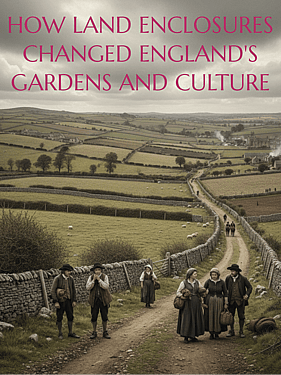
How land enclosures changed England
January 30th, 2012 By Karen Elzinga
England- A historical look at Enclosures.
A historical look at enclosures in England Over many centuries, England's land enclosures led to a wide range of changes, mostly shaped by the goals of the landowning elites. Their aims included managing the land better, gaining more control, growing their wealth, and making sure their estates were profitable.
The way land was owned and shared shifted from communal arrangements—where villagers shared fields and made joint decisions—to different forms where landowners could separate and control land for their own benefit. These changes played a crucial role in boosting England's farming and livestock industries, laying the groundwork for important economic progress.
When Parliament stepped in, wealthy landowners gained the power to legally remove small farmers and tenants. This often led to whole villages being cleared out. Rents were raised sharply, ensuring only those who could make the land productive could stay.
Famous landscape designer Lancelot (Capability) Brown also influenced the era, as many landowners hired him to shape their grounds, removing natural forests and reshaping the land with new trees, bushes, and gardens to reflect a more 'natural' look, though everything was carefully planned.
By the fifteenth century, nearly half the farmland in England was enclosed, according to historian Warde (2004). Earlier on, villages would mark out plots using turf, letting individuals plant crops, but after the harvest, everyone could graze their animals together. This old system didn't allow much room for new ideas or personal decision-making, since the community decided when and what to grow.
Over time, the system changed, giving individuals more freedom to use their land as they chose. This movement, known as the enclosure movement, greatly shaped England’s agriculture and economy.
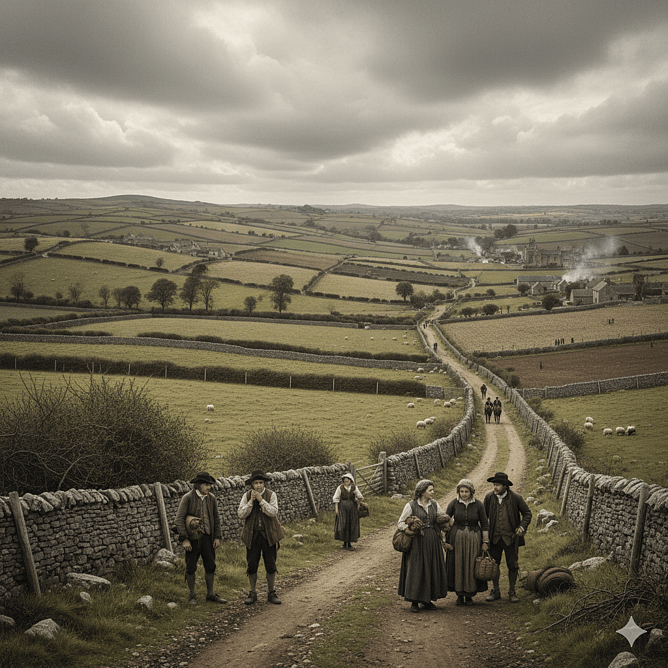
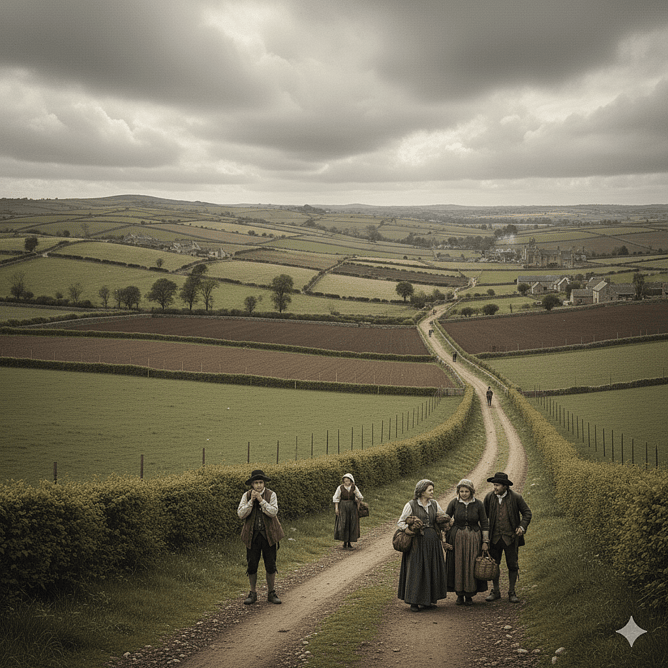
During the enclosure movement in England, land was divided into neat, clearly marked plots using ditches or rows of hedge trees. This approach created a natural look, fitting in with estate landscapes, and allowed owners to adjust boundaries easily.
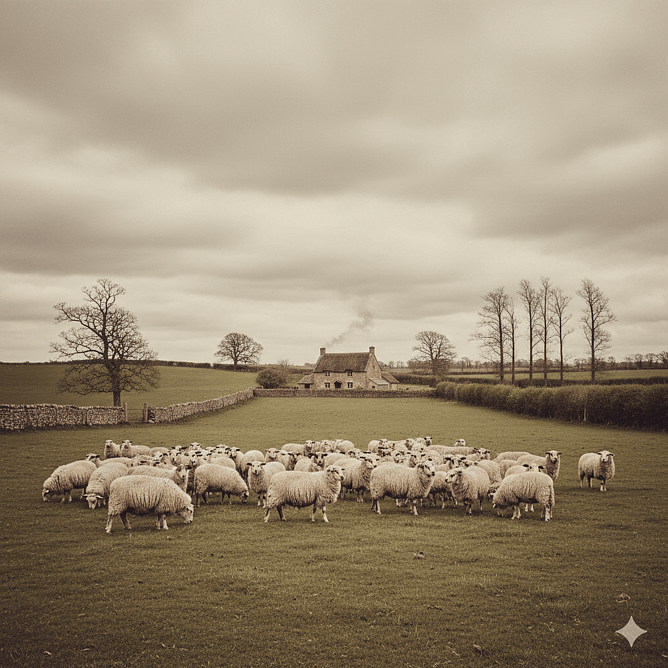
As private land ownership became more common, a key question was where sheep would graze. At the time, wool prices were rising, making sheep farming a valuable pursuit. Many landowners wanted more space for their flocks so they used land that had previously supported peasant villagers.
This shift, which happened mostly in the fifteenth and sixteenth centuries, forced many people off their homes and farmland (Bradley, 1918). These changes sparked unrest and made food supplies less stable (Warde, 2004
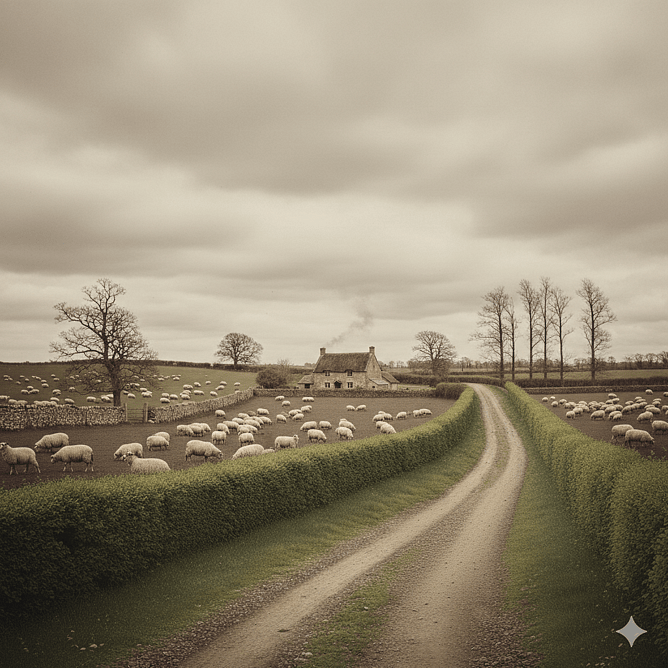
At the end of the sixteenth century, the first enclosure movement slowed as wool prices dropped below wheat. Many people in England converted enclosed land back to shared pasture, especially as the soil became less fertile from overuse. After letting these fields rest for some years, farmers were able to grow crops again. Historian Bradley (1918) notes that this change led to another rise in enclosures during the seventeenth century—a shift that shaped the rural landscape and the way people worked with their land across the generations.
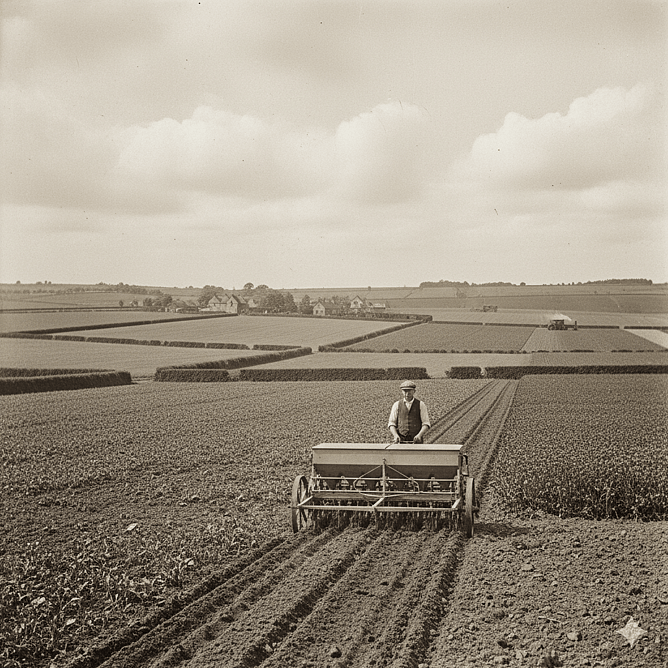
New farming techniques in the early 1900s, like the mechanical seeding machine and crop rotation promoted by Charles Townshend, helped shape modern agriculture. William Coke also introduced better fertilisation methods. This led to strong demand for farming products, making it important for landlords and tenants to work together. Peaceful agreements allowed for efficient, large-scale crop production during this time (Bradley, 1918; Warde, 2004; Kreis, 2001).
Between 1760 and 1820, new laws called Parliamentary enclosures changed how land in England could be used. With these acts, large landowners who held 80% of the land could make decisions over smaller landholders, even if they disagreed (Warde, 2004). The main goal for elite farmers was to have control and make their land more productive, which the old three-field system did not allow. Before these changes, it was difficult for landowners to change what they grew or when they planted. It took years of effort and significant cost before these changes became law, but they led to more flexible and efficient land use across the country.
Between 1750 and 1760, Parliament in England passed 150 new acts of law. This number grew quickly—over 900 enclosure acts were introduced from 1800 to 1810 alone (Keish, 2001). By 1845, there were 4,000 private enclosure acts, covering 7 million acres, with another 7 million enclosed unofficially (Slater, 1913). These enclosure laws aimed to boost food production as the population was expected to double in the 18th century. This historic change shaped landscape and community life—something that still inspires artists and crafters today, including those here at Elzinga Art
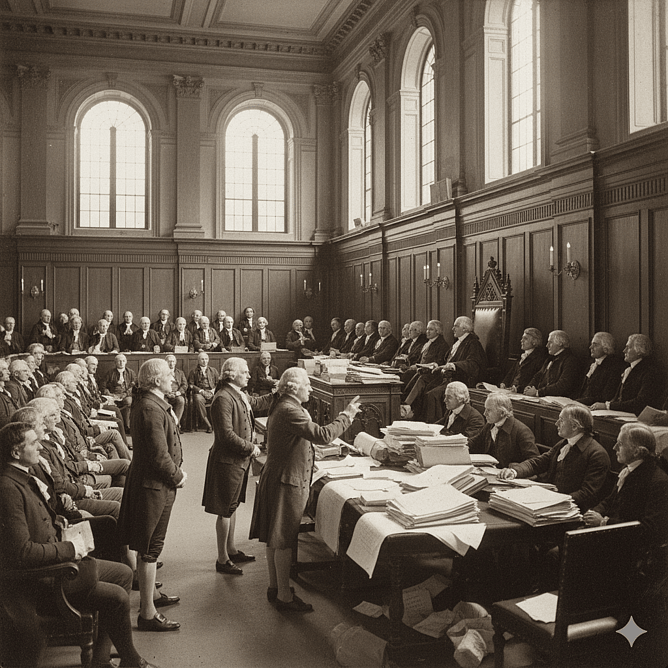
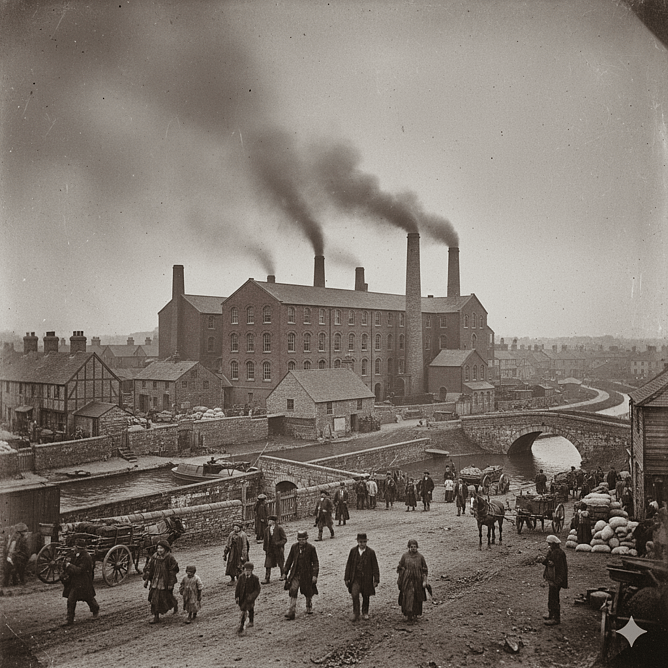
In the 1700s, a dramatic shift took place in England’s manufacturing industry. For the first time, those with new wealth from factories and overseas trade—like business owners, bankers, and investors—could buy land traditionally reserved for aristocrats. This growing middle class influenced parliament to pass enclosure acts, which ended common land rights for small land owners and peasant farmers. Even though these small landholders received payment, they struggled to keep up with large estate owners who could produce food cheaply and efficiently (Warde, 2004). Many lost their land altogether and started working in the quickly expanding industrial factories across England (Kreis, 2001).
As these new landowners collected large estates, they commissioned grand homes and designed impressive gardens for their properties (Lead catalog essay, 2005). Discovering the history of art, craft, and industry shows how creativity often finds a way, even in changing times.
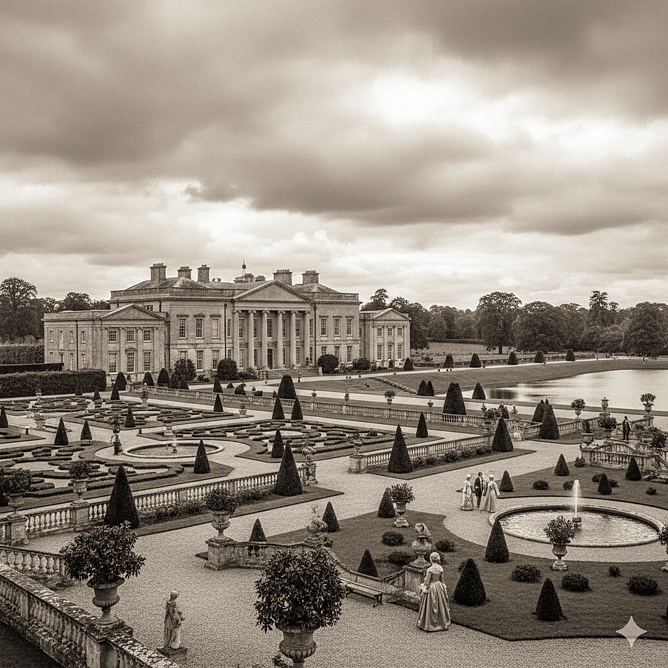
Landscaping became more popular in the late seventeenth century, especially with the rise of the "Natural" English garden style in the eighteenth century. Lancelot 'Capability' Brown made a big impact during this time. He earned his nickname because he was skilled at improving difficult estates and transforming them into beautiful, natural-looking spaces. When the 1st Duke of Northumberland took over Alnwick Castle, he invited Capability Brown to design the gardens.
Brown cleared forests and replanted trees along the edges to make the estate look bigger. He even moved the River Aln to fit his vision, showing his practical approach to garden design. Though his methods were bold, Brown’s gardens looked effortless and natural. Studying his work inspires creative approaches to landscape art, and his story is a wonderful example for anyone at Elzinga Art into landscape painting, and using inspiration into garden designs from the masters within their work.
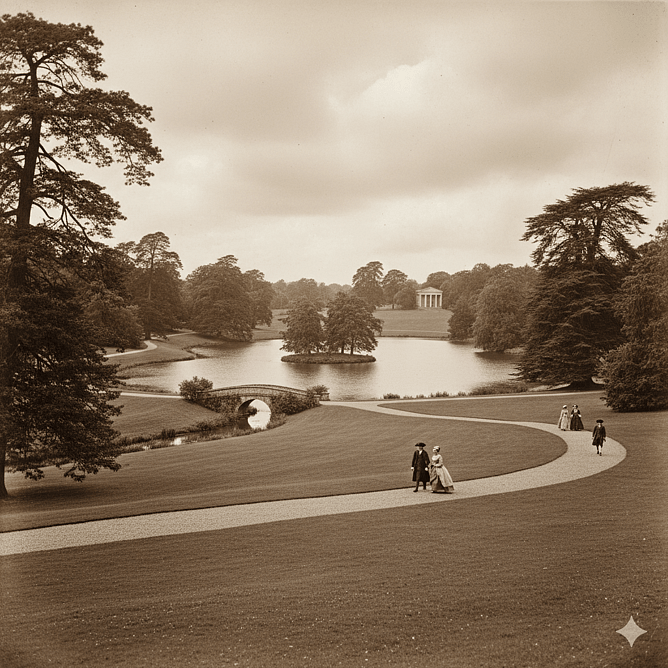
During the Georgian era, garden designer Capability Brown became famous for transforming ways people viewed landscapes. In 1773, Brown decided to have the village of Milton Abbas in Dorset moved, just to create a new lake for Lord Milton (Titchmarsh, 2003, 97). His passion for crafting natural-looking gardens lived on long after his death in 1783 (Lead catalogue essay, 2005). Many British artists and gardeners at the time wanted to move away from the formal, geometric styles seen in French gardens, seeing them as too strict. Instead, they embraced a new English garden style, which later influenced much of Europe (Titchmarsh, 2003, 94).
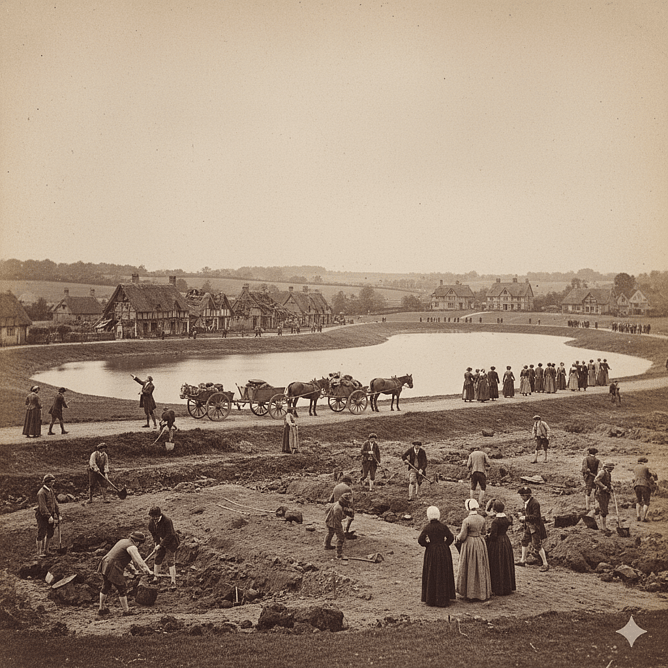
In the past, only the very wealthy landowners with large estates could create these classic gardens. These gardens needed a lot of space, and sometimes entire hills were reshaped. Landscapers often built fake ruins that owners could see from their homes, giving the gardens a natural, rustic look (Titchmarsh, 2003, 97)
Sweeping lawns, winding paths, carefully placed trees and shrubs, as well as created lakes that mimic natural waters, were common among the estates of the wealthy (Lead catalogue essay from the exhibition, 2005). Estate owners often wanted their land to appear vast and impressive. To achieve this, they used clever landscaping tricks, including ha-has—sunken ditches or walls that kept animals in but made grounds seem endless (Titchmarsh, 2003, 98), (Tatter, 1997).
Writer Horace Walpole even chose a breed of small cattle to make his property look more expansive (Titchmarsh, 2003, 98).
These creative touches remind me how thoughtful design, whether in historic gardens or in local art projects, can transform everyday surroundings.
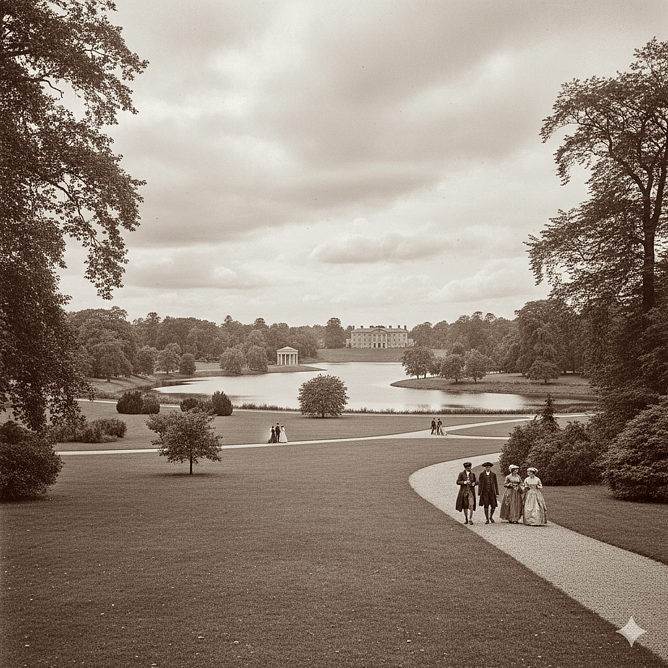
During the era when grand landscape gardens flourished across England, many estate owners started using enclosure acts to expand their land for agriculture and decorative gardens. While the idea promised more productive use of land, it often led to hardship for local families. Many small farmers and tenants lost their ability to rent modest plots and were replaced by those viewed as more productive.
Some landlords increased rents as much as seven times, making it impossible for many to stay. These changes often meant entire villages were cleared away so that land could be re-purposed for larger farms and impressive gardens.
The traditional, affordable strips of farmland vanished, and smallholders were forced to move away or take work on the property of wealthier landowners.
As a result, only a few landholders enjoyed the leisure and creative pursuits these new gardens allowed, while those who had farmed for generations faced poverty and loss of opportunity.
This chapter in rural history reflects the impact of cultural and agricultural change on everyday people—a reminder of how art and landscape design have long shaped lives, both here and abroad. (Sources: Slater, 1913; Titchmarsh, 2003, p. 97).
Reading this in 2026 Australia, I can't help but notice the similarities with today—massive houses overshadowing smaller homes, and rents climbing so high that only those with plenty of money can afford them. Many who can't manage are pushed to camp in parks or on the streets. It makes me wonder if history keeps repeating itself, with greed driving the same cycle of displacement and inequality, rather than true progress. (Elzinga.k 2026))
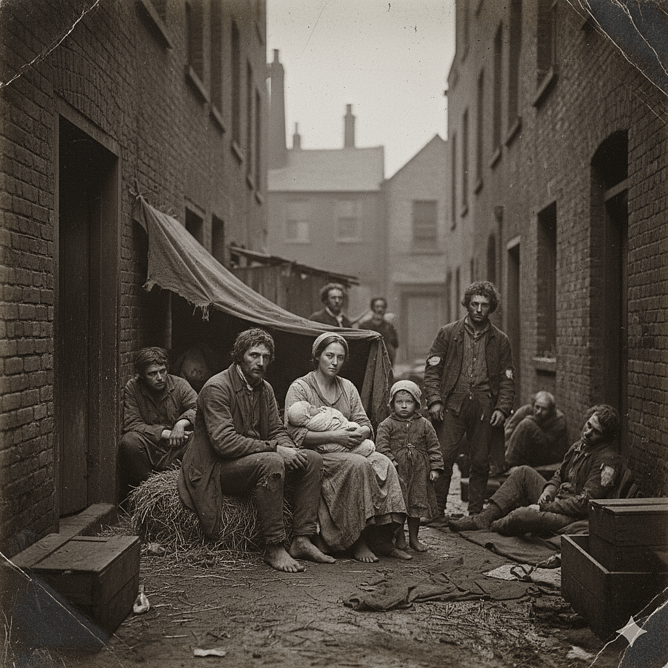
Taking a closer look at England’s history, the story of enclosures reveals both hardship and progress. At first, villages and poorer families faced difficult times as land was divided and controlled, especially with the arrival of the Parliamentary Enclosure Acts. These changes, harsh as they were, sparked major economic growth for England and led to new ways of thinking about landscapes, gardening, and art across the world.
Early enclosures could be made with simple tufts of grass, then later with sturdy ditches and hedges. Many landowners influenced and benefitted from the enclosure acts, often putting their own interests first. Grand gardens became a key feature for wealthy landlords, reflecting popular trends and artistic styles of the day.
The work of Lancelot "Capability" Brown, for example, changed garden design in the Georgian era by favouring natural-looking landscapes instead of the formal French style. Landowners even used clever design techniques to make small estates seem much larger, a trick still used in modern home gardens. As someone who runs Elzinga Art I find inspiration in these creative adaptations. The history of gardens and enclosures reminds me how artful thinking can transform any space, big or small.
By Karen Elzinga (Copyrighted)
PICTURES: All images are AI built for the purpose of clarifying and context of the written text and were built by Gemini.